Printing Fly

FREE SHIPPING on All Orders in Los Angeles

Quality Customer Service

Author name: PrintingFly

Construction fence banner with a contractor logo and building rendering printing on a large-format printer
Blog, Signs & Banners

Construction Fence Banners in Los Angeles: Materials, Sizes and Finishing Options

A construction fence can do more than separate a job site from the surrounding property. It can identify the project, display development renderings, promote future leasing, and provide useful information to people passing by. Choosing construction fence banners in Los Angeles involves more than selecting artwork. Contractors and property managers need materials suited to the location, accurate measurements, appropriate finishing, and an installation plan that accounts for wind exposure and changing site conditions. What Construction Fence Banners Do for Los Angeles Job Sites Printed fence graphics help developers, general contractors, and property managers communicate with different audiences throughout a project. For developers, they provide space to introduce a property before construction is complete. Contractors can display company branding, while leasing teams can promote future residential or commercial availability. Common applications include: Development Names and Project Renderings General Contractor Identification Leasing and Sales Announcements Property Management Contact Information Temporary Entrance Identification Project Branding Along Street Frontages Construction banners can also help maintain a consistent appearance across long fence lines, especially when multiple contractors are working on the same development. Mesh vs. Vinyl: Choosing the Right Construction Banner Material Material selection should begin with the fence location and exposure. Mesh banner printing uses perforated material that allows some air to pass through. It is commonly selected for exposed chain-link fencing because it reduces wind resistance compared with solid material. A 13oz vinyl banner provides a continuous printing surface with strong color coverage and greater opacity. It can be appropriate for protected locations where detailed graphics and smaller lettering matter. For large outdoor installations, ask the fence contractor to evaluate the additional load before approving any banner covering. Neither material eliminates the need for proper installation and regular inspection. Standard Fence Banner Sizes and How to Measure Your Fence Line Temporary construction fencing often uses panels approximately six feet tall, although actual dimensions vary by supplier and installation. Before choosing fence banner sizes, measure the usable area rather than relying on nominal panel dimensions. Record: Width Between Attachment Points Available Height Above Ground Fence Post and Brace Locations Gate Openings Uneven Ground Conditions Areas Requiring Separate Panels Allow space for hems, attachments, and necessary clearance. For long perimeters, dividing artwork into individual sections can simplify installation and future replacement. Hemming, Grommets and Wind Slits Explained Finishing affects how a banner attaches to fencing and performs outdoors. Hems reinforce the edges, helping distribute tension around attachment points. Grommets provide reinforced openings for approved fasteners. Grommet spacing should be selected according to the banner dimensions and installation requirements. Wind slits are sometimes requested for solid banners, but they can weaken the material and do not substitute for an appropriately engineered installation. For exposed locations, mesh may be preferable to cutting openings into solid vinyl. Printing Fly offers custom sizing and finishing options, including reinforced hems and grommets. Printing Options for Logos, Renderings and Project Details The viewing distance should determine how much information appears on a fence graphic. Drivers and pedestrians need to recognize important details quickly. Large project names, clear images, and strong contrast are generally more effective than dense paragraphs. For architectural renderings, solid vinyl may preserve fine details more clearly than perforated mesh. Developers can also separate permanent branding from information likely to change, such as leasing dates or contact numbers. Before production, verify: Logo Resolution and Brand Colors Artwork Dimensions Safe Areas Around Grommets Readability at Viewing Distance Current Contact Information Panel Order for Continuous Designs Los Angeles Construction Site Signage Rules to Know Construction site signage requirements depend on the project’s location, permit conditions, and the type of information displayed. Los Angeles projects may be subject to city sign regulations, building permit requirements, temporary fence rules, and applicable right-of-way restrictions. Required safety notices and permit postings should not be treated as interchangeable with promotional fence graphics. Before installation, contractors and property managers should confirm whether the proposed banner requires approval and whether it affects visibility, pedestrian access, or fence safety. Requirements can differ between the City of Los Angeles, neighboring municipalities, and unincorporated Los Angeles County areas. How to Order Construction Fence Banners for Multiple Sites Property managers and developers overseeing several projects benefit from standardized printing procedures. Keep a separate record for each location with approved dimensions, artwork revisions, quantities, and delivery instructions. For construction fence banners in Los Angeles, using consistent panel sizes where practical can simplify repeat orders. Maintain editable design files so project names, leasing details, and contact information can be updated without rebuilding the entire layout. Printing Fly can assist with custom dimensions, artwork preparation, and repeat printing for multi-site projects. Why Los Angeles Contractors Choose Printing Fly Printing Fly produces custom outdoor graphics for construction companies, developers, and property management teams. Our printing options support project identification, development advertising, and temporary fence displays. We provide large-format printing, custom dimensions, graphic design assistance, and finishing options for outdoor installations. Contractors can discuss material selection, artwork requirements, and quantities before ordering construction fence banners in Los Angeles. Frequently Asked Questions Is mesh or vinyl better for construction fencing? Mesh is generally preferable for exposed chain-link fencing because its perforations reduce wind resistance. Solid vinyl offers greater opacity and image detail for protected locations. The fence contractor should confirm that the proposed installation is suitable for the site’s conditions. What size should a construction fence banner be? The correct size depends on the usable fence area, attachment points, and required clearance. Temporary fence panels are often approximately six feet tall, but dimensions vary. Measure the actual installation area before submitting artwork. Do construction fence banners need grommets? Grommets are commonly used to provide reinforced attachment points around a banner. Their spacing and placement depend on the dimensions and mounting method. Reinforced hems can help distribute tension along the edges. Are promotional fence banners allowed on every Los Angeles construction site? Not necessarily. Local sign rules, permit conditions, and property restrictions may affect whether promotional graphics are permitted. Contractors should verify the requirements for the specific project

Professional 10x10 trade show booth with a fabric backwall, branded counter, literature stand and plants
Blog, Trade Show Displays

First Trade Show Booth? How to Make a 10×10 Display Look Professional

Your first trade show is an opportunity to introduce your business to buyers, distributors, and potential partners. But a small exhibit space can quickly become crowded with furniture, promotional materials, and displays that compete for attention. A well-planned 10×10 trade show booth gives visitors a clear reason to approach your company. The goal is to create a professional presentation that communicates what you offer without filling every available foot of space. What a First-Time Exhibitor Needs in a 10×10 Trade Show Booth A standard 10×10 exhibit provides approximately 100 square feet before accounting for display structures, furniture, and storage. Start with the exhibitor manual. It establishes important requirements that affect what you can bring and how your booth can be arranged. A practical setup typically uses: Branded Backwall Display One Compact Counter or Table Coordinated Table Cover Portable Literature Holder Focused Product or Service Graphics Concealed Storage for Supplies Many 10×10 booth kits combine compatible display components, helping new exhibitors avoid mismatched dimensions and graphics. Check the event’s height limits, electrical requirements, and display restrictions before ordering. Choosing a Backwall That Anchors the Whole Booth The backwall is usually the largest printed surface in a small exhibit. It should identify your company and communicate its main offering without requiring visitors to read several paragraphs. Choose one primary message supported by a clear product image or relevant graphic. A backwall can also reduce the need for multiple freestanding signs, leaving more room for conversations and product demonstrations. For exhibitors planning several events, consider a structure with replaceable graphics. This allows the display to support new products or campaigns without purchasing an entirely new frame. SEG Fabric Displays vs. Pop-Up Frames for a Polished Look An SEG fabric display uses a silicone-edged graphic inserted into a compatible frame channel. The result is a taut fabric surface with minimal visible hardware. Pop-up frames typically expand into position and support attached graphic panels or fabric covers. The differences matter when choosing equipment: SEG Systems – Smooth Fabric Presentation and Replaceable Graphics Pop-Up Frames – Collapsible Structures for Portable Exhibits Fabric Graphics – Lightweight Transport and Reduced Glare Panel Systems – Defined Graphic Sections and Modular Replacement Neither option is automatically better. Consider transportation, assembly requirements, replacement graphics, and how frequently the display will be used. Layout Tips That Make a 10×10 Booth Feel Open and Inviting A common first-time mistake is placing a full-width table across the front of the booth. This can create a physical barrier between staff and visitors. Position the main counter to one side when event rules and the display configuration allow. Keep the center area available for conversations and product demonstrations. Avoid adding more chairs than your team needs. Furniture consumes floor space and can interfere with visitor movement. For a 10×10 trade show booth, a simple layout often works better than trying to reproduce a larger exhibit on a smaller footprint. Table Throws, Banner Stands and the Details Buyers Notice Small finishing choices influence whether an exhibit looks coordinated. Trade show table throws can conceal supplies stored beneath a table while displaying a company logo on the front. Banner stands are useful for supporting messages, especially when a backwall cannot communicate every important product category. Keep the graphics consistent across all printed materials. Check that logos use the same colors, fonts, and proportions. Avoid combining outdated promotional artwork with newer branding. For trade show booth signage, confirm that important information remains visible when staff members stand in front of the display. Design Rules for Booth Graphics That Read from the Aisle Effective trade show booth design starts with the distance between the visitor and the printed message. People walking past should be able to identify your company and understand its main offering without stopping to study the display. Use these guidelines: Place the Company Name Near the Top Lead With One Clear Message Use Large, High-Contrast Lettering Choose Product Images With a Clear Focal Point Limit Supporting Text Keep QR Codes Within Comfortable Scanning Reach A helpful test is to view the artwork at a reduced size on your screen. If the main message becomes difficult to identify, the design may be too complicated. Planning Print Lead Times Before Your First Los Angeles Trade Show Your event date is not necessarily your printing deadline. Exhibitors may need to deliver materials to an advance warehouse or a designated receiving location before installation begins. Review the event manual for shipment cutoffs, labeling requirements, and move-in procedures. Allow time for artwork approval, production, delivery, and a complete test assembly. If you’re ordering 10×10 booth kits for the first time, confirm the graphic dimensions against the actual display hardware before approving production. Reusing an existing frame? Verify the manufacturer and model because similarly sized displays may require different graphic measurements. Why First-Time Los Angeles Exhibitors Choose Printing Fly Printing Fly helps Los Angeles businesses prepare printed materials for trade shows, conferences, and exhibitions. We produce custom backdrops, banner stands, table covers, and other large-format display graphics. Our team can also assist with artwork preparation and sizing so graphics match the intended display format. First-time exhibitors can discuss their booth dimensions, printing requirements, and event deadlines before placing an order. Frequently Asked Questions What should I buy first for a 10×10 trade show display? Start with a backwall that clearly identifies your business and its main offering. Add a compact counter or table with coordinated branding and enough space for conversations. Confirm the event’s display rules before purchasing equipment. Is a fabric display better than a traditional pop-up backdrop? Fabric displays can provide a smooth, continuous printed surface, while pop-up systems offer collapsible frames designed for portability. The right choice depends on your budget, transportation needs, and setup preferences. If you plan to reuse the hardware, compare the cost and availability of replacement graphics. How much text should I put on my trade show backdrop? Keep the main message short enough to understand while walking past. Your company name, primary offering, and

Coming soon apartment signage for a new development in front of a building under construction
Blog, Signs & Banners

How to Choose the Right Signage for a New Apartment Development

A new apartment development needs to attract attention long before its first residents move in. From construction through opening day, signs help introduce the property, communicate availability, and guide prospective renters. Effective apartment signage changes as the development progresses. Early graphics build awareness, while later displays support leasing activity and help visitors find their way around the property. What Apartment Signage Needs to Do for a New Development Signage should serve a specific purpose at each stage of development. Property managers and leasing teams can avoid unnecessary printing expenses by identifying their communication priorities before ordering. Common objectives include: Introducing the Property Name and Branding Announcing Upcoming Availability Promoting Leasing Opportunities Displaying Contact Information Directing Visitors to the Leasing Office Identifying Entrances and Parking Areas A coordinated signage plan helps the property maintain a recognizable identity as construction barriers come down and leasing operations begin. Coming Soon Banners for the Pre-Leasing Phase The months before a property opens provide an opportunity to introduce its name and establish early interest. Coming soon banners can be installed along construction fencing, near street-facing entrances, or in other approved locations where prospective renters will notice them. Effective designs typically feature a large property name, an anticipated opening period when confirmed, and a website or QR code for inquiries. Architectural renderings can help communicate the property’s appearance before finished buildings are available for photography. Real estate banners should use clear messaging that remains relevant throughout the pre-leasing period. Avoid printing dates that may change unless replacement graphics are already part of the plan. Leasing Banners That Drive Tours and Inquiries Once applications or tours become available, promotional messages should become more direct. Leasing banners can advertise available floor plans, announce that tours are underway, or encourage prospective residents to contact the leasing team. Keep the main message readable from the intended viewing distance. Large lettering and strong contrast generally work better than lengthy descriptions. Useful information may include: Now Leasing Announcements Studio, One-Bedroom or Two-Bedroom Availability Leasing Office Hours Website Addresses QR Codes for Tour Scheduling Verified Move-In Promotions Place contact details where pedestrians can read them safely. QR codes are most useful at locations where visitors can stop rather than while driving past. Directional and A-Frame Signs for Leasing Office Traffic Visitors should be able to locate the leasing office without searching the entire development. Directional signs can identify temporary entrances, designated parking areas, and routes around construction zones. A-frame signs are useful near pedestrian approaches and leasing office entrances because they can be repositioned as visitor access changes. Use short messages such as “Leasing Office,” “Tours This Way,” or “Visitor Parking” with clear directional arrows. Freestanding signs must be placed where permitted and should not obstruct accessible routes, sidewalks, or required exits. Choosing Materials That Hold Up Outdoors in Los Angeles Outdoor signs face prolonged sunlight, wind, dust, and occasional rain. Material selection should account for both the installation location and expected display period. Vinyl banners are a practical choice for many temporary promotional displays. Mesh material may be more suitable for exposed fencing because it allows some air to pass through. Rigid sign materials can be appropriate for directional displays, while portable frames support temporary leasing announcements. Before ordering, consider: Expected Installation Duration Sun and Wind Exposure Available Mounting Surfaces Required Sign Dimensions Reinforced Edges and Grommets Replacement and Maintenance Needs The property team should confirm that fences, frames, and mounting hardware can safely support the selected graphics. Keeping Property Signage On-Brand Across Every Phase Consistent design helps prospective residents recognize the property across different signs and marketing materials. Use the same approved logo, brand colors, typography, and naming conventions throughout the development. A shared artwork template can simplify updates when leasing messages change. It also reduces the risk of outdated phone numbers or inconsistent branding appearing on different displays. Property management printing may involve multiple departments, so designate one person to approve final artwork before production. Keeping organized design files makes it easier to replace damaged signs or order additional graphics later. Planning Signage Budgets and Timelines With Your Property Team A signage budget should account for more than the initial installation. Separate the project into pre-leasing, active leasing, and opening phases. Identify which displays can remain in place and which will need updated messages. Request pricing based on actual dimensions, materials, quantities, and finishing requirements. For developments with several buildings, standardizing common sign sizes can simplify reorders and reduce artwork preparation time. Allow time for design approval, production, delivery, and installation. Confirm deadlines with your printer before announcing a launch date. Why Los Angeles Property Managers Choose Printing Fly Printing Fly provides custom large-format printing for developers, property managers, and leasing teams throughout Los Angeles. Our services support promotional banners, outdoor graphics, directional displays, and other printed materials used during property launches. We offer custom sizing, graphic design assistance, and finishing options to accommodate different display requirements. Whether you need apartment signage for one building or coordinated graphics for multiple properties, our team can help prepare your order for production. Frequently Asked Questions When should a new apartment development order its first signs? Planning should begin before the property is ready to accept leasing inquiries. Early graphics can introduce the development and direct interested renters to an approved information source. Production deadlines should account for artwork approval and installation scheduling. What information should appear on a pre-leasing banner? A pre-leasing banner should prominently display the property name and a clear way to request information. An anticipated opening date can be useful when it has been confirmed. Keep the design simple enough to read from the street or sidewalk. Are vinyl banners suitable for outdoor apartment advertising? Vinyl banners are commonly used for temporary outdoor promotions because they provide a printable surface for large graphics and lettering. Their suitability depends on exposure, mounting conditions, and installation duration. Mesh may be preferable for certain wind-exposed fence applications. Can leasing signs be updated after a property opens? Yes. Temporary signs can be

Mesh construction banner with a contractor logo on a chain-link fence at a high-rise job site
Blog, Signs & Banners

Mesh Construction Banners: When and Why Los Angeles Job Sites Should Use Them

Construction sites need outdoor graphics that display project information without placing unnecessary strain on temporary structures. Large solid banners can increase wind pressure on exposed fencing, making material selection an important safety consideration. Mesh construction banners offer an alternative. Their perforated surface allows airflow while displaying company logos, development renderings, and project information. Understanding their advantages helps contractors choose suitable graphics for different locations. What Mesh Construction Banners Are and How They Work Mesh banners are made from perforated material that allows some air to pass through the printed surface. This reduces wind resistance compared with solid vinyl of similar dimensions. The openings also affect print appearance. Fine details and lighter colors may appear less defined, making bold artwork and readable lettering particularly important. For contractors comparing mesh vs vinyl banners, the decision depends on wind exposure, viewing distance, and mounting conditions. When a Job Site Should Switch from Vinyl to Mesh Solid vinyl provides an uninterrupted printing surface, making it useful for detailed graphics in protected locations. Mesh is often more appropriate when banners cover exposed fencing or other approved outdoor structures. Consider switching when: Fencing Faces Open Streets or Parking Areas Large Graphics Cover Extended Fence Lines Wind Exposure Is a Recurring Concern Temporary Structures Require Printed Covers Banner Installations Will Remain Outdoors for Months A qualified site professional should confirm that the supporting structure can accommodate the installation. Wind Resistance on Exposed Los Angeles Job Sites Wind conditions vary across coastal neighborhoods, hillside developments, and open construction properties. Solid banners catch more wind because air cannot pass through their surface. Mesh reduces this effect, but it does not eliminate wind loads or guarantee fence stability. Contractors ordering a mesh banner in Los Angeles should evaluate the proposed dimensions, attachment points, fence condition, and site exposure before installation. Using Mesh Banners on Fencing, Scaffolding and Building Wraps Different mounting surfaces require different installation methods. Chain-link fencing commonly supports temporary promotional graphics when properly assessed and secured. Scaffolding banners require approval based on the scaffold design, wind loading, and permitted attachment points. Large building wraps may require engineered mounting systems and specialized installation crews. Common applications include: Construction Perimeter Fencing Contractor Identification Development Advertising Approved Scaffolding Graphics Temporary Leasing Announcements Large Building Wraps Confirm structural requirements and applicable permits before ordering. Privacy, Dust Control and Branding Benefits Mesh provides partial screening around active construction areas. Visibility through the material depends on its openness, lighting, and viewing distance. Although mesh may intercept some airborne particles, promotional banners are not substitutes for approved dust-control measures. Branding remains a primary advantage. Job site banners can introduce a future development, identify the general contractor, or direct prospective tenants to leasing information. Print Visibility and Design Tips for Mesh Banners Because perforations reduce the continuous printing surface, artwork should emphasize readability. Large lettering, recognizable logos, and strong contrast generally perform better than detailed illustrations or lengthy descriptions. Before submitting artwork, check: High-Resolution Logos and Images Large, Readable Headlines Strong Color Contrast Clear Contact Information Adequate Space Around Grommets Correct Finished Dimensions For a mesh banner in Los Angeles, consider whether the primary audience will view the graphics from a sidewalk, parking area, or passing vehicle. Installation and Maintenance Through the Life of a Project Outdoor banners require secure attachment and routine inspection. Reinforced hems help distribute tension, while grommets provide designated attachment points. Their placement should match the approved installation method. Inspect banners after significant wind events and during regular site checks. Loose fasteners, torn edges, damaged grommets, or shifting fencing require attention. Construction banners in Los Angeles may also need replacement when project branding, contact details, or construction phases change. Why Los Angeles Builders Choose Printing Fly for Mesh Construction Banners Printing Fly provides custom large-format printing for contractors, developers, and property management teams. Our services support temporary fence graphics, development advertising, and outdoor project identification. We offer custom sizing, graphic design assistance, reinforced hems, and grommet finishing. Contractors can discuss artwork, quantities, and production requirements before ordering mesh construction banners. Frequently Asked Questions Are mesh banners better than vinyl for windy construction sites? Mesh generally reduces wind resistance compared with solid vinyl because air passes through its perforations. However, it still creates wind loads that affect the supporting structure. A qualified professional should evaluate the proposed installation. Can mesh banners be attached to scaffolding? Yes, when the scaffold design permits the additional covering and associated wind loads. Attachment methods must comply with the approved scaffold configuration. Contractors should obtain the necessary professional approval before installation. Do mesh banners provide complete construction site privacy? No. Mesh provides partial screening, but visibility varies with material openness and lighting. Projects requiring greater privacy may need an alternative screening solution. How long do outdoor mesh banners last? Their service life depends on material quality, sunlight, weather, installation, and maintenance. Poor attachment or repeated wind damage can shorten their usable life. Regular inspections help identify deterioration. Can Printing Fly produce custom mesh banner sizes? Yes. Printing Fly offers custom large-format printing for construction fencing and other suitable outdoor applications. Contractors should provide accurate dimensions, approved artwork, and finishing requirements before production. Summary Mesh banners offer a practical alternative to solid vinyl for exposed construction fencing and approved temporary structures. Their perforated material reduces wind resistance while providing space for project branding, contractor identification, and development advertising. Successful installations require more than selecting the right material. Contractors must consider structural capacity, mounting methods, artwork readability, and local requirements. Proper finishing and ongoing inspections are equally important, particularly when graphics remain outdoors through multiple construction phases. Order Custom Mesh Construction Banners from Printing Fly Need outdoor graphics for a construction project? Printing Fly provides custom mesh printing, reinforced finishing, and design assistance for Los Angeles contractors and developers. Call 310-287-9982. to discuss your dimensions, artwork, and printing requirements.

Mesh vs vinyl fence banners side by side on a construction fence at a Los Angeles apartment development
Blog

Mesh vs. Vinyl Fence Banners for Los Angeles Developments: What Property Managers Should Choose

A development fence can serve several purposes throughout construction. It can identify the developer, promote future leasing, direct visitors, and keep the property’s appearance consistent while work continues. Choosing mesh fence banners in Los Angeles property managers can rely on requires more than comparing print prices. Material selection affects installation, visibility, maintenance, and replacement costs. Mesh banners and solid vinyl each have advantages depending on the property’s location and stage of development. What Separates Mesh Fence Banners From Solid Vinyl Banners Mesh has a perforated surface that allows some airflow, making it suitable for exposed fencing. Solid vinyl banners provide an opaque printing surface with stronger color coverage and finer image detail. The right choice depends on who manages the project and what the signage needs to accomplish. Property Managers – Maintain consistent signage across occupied and developing properties Developers – Announce projects and promote upcoming residential or commercial space General Contractors – Coordinate printed coverings with approved fence installations Leasing Teams – Display renderings, contact information, and availability announcements Construction Managers – Organize entrance identification and site information How Wind Load Affects Fence Banners on Los Angeles Development Sites Solid banners can place considerable pressure on temporary fencing during strong winds. Large installations may transfer that force to fence posts, braces, and connections. For mesh fence banners in Los Angeles contractors install along exposed streets, airflow is an important consideration. Perforations reduce wind resistance but do not eliminate structural loading. This is particularly relevant in the San Fernando Valley and areas affected by Santa Ana winds. Contractors should confirm fence capacity, attachment methods, and any site-specific requirements before installation. Printing Fly supplies the printed material and finishing; structural approval remains the responsibility of the appropriate site professional. When Solid Vinyl Banners Make More Sense for Property Managers Solid vinyl is useful where detailed graphics matter more than airflow. A protected sales entrance, leasing trailer, or temporary wall may need high-resolution renderings and readable contact information. An 18oz blockout banner can provide additional opacity where background visibility or light interference is a concern. Confirm the material specification and mounting location before ordering. For property management signage, solid materials can help distinguish leasing promotions from general construction identification. Property managers should also keep required regulatory notices separate from promotional artwork when specific posting rules apply. Print Quality and Color Visibility: Mesh vs. Vinyl A development rendering that looks clear on a computer screen may lose important detail when printed on perforated material. Mesh banners work particularly well with large lettering, simplified illustrations, and high-contrast colors. Fine architectural lines and small QR codes are better suited to a continuous printing surface. For developers, the goal is to make the project recognizable from the street. For leasing teams, the priority is making the property name, website, and contact information readable. Printing Fly can assist with artwork adjustments so the design suits the selected material and viewing distance. Durability, Grommets and Finishing for Long-Term Fence Installs Construction schedules change, and temporary fencing may be repositioned several times before completion. Proper finishing helps reduce damage during installation and relocation. Before ordering construction fence banners, confirm: Actual Fence Panel Measurements Reinforced Hem Requirements Grommet Placement Gate and Entrance Openings Panel Separation Points Approved Attachment Methods Printing Fly offers custom sizing, reinforced hems, and grommet finishing. Separate panels are often easier for contractors to install and replace than one continuous graphic spanning movable fence sections. Matching Banner Material to Each Phase of a Los Angeles Development Different project stages create different communication needs. During demolition and early construction, developers may prioritize project identification and site information. Later, marketing teams may introduce architectural renderings and leasing announcements. As occupancy approaches, temporary signage may shift toward entrance directions and visitor information. Property managers can reduce unnecessary printing by keeping permanent branding separate from dates, phone numbers, and other frequently changing details. This also allows individual panels to be updated without replacing an entire fence installation. Cost, Lead Times and Reordering for Multi-Site Property Teams For property managers overseeing several developments, repeatability can be as valuable as the initial printing cost. Standardizing panel sizes, maintaining editable artwork, and tracking revisions helps prevent outdated graphics from reaching a jobsite. Printing Fly offers quantity pricing for multi-site orders and free shipping throughout Los Angeles. Rush production in two to three business days is available for qualifying projects, subject to confirmation. Providing accurate dimensions, approved artwork, quantities, and delivery addresses early helps keep production organized. Why Los Angeles Property Managers Choose Printing Fly Printing Fly produces mesh fence banners in Los Angeles developers, contractors, and property managers use for construction sites, perimeter fencing, and development announcements. We offer custom dimensions, large-format printing, reinforced finishing, and graphic design support. Our team also produces vinyl banners for detailed development graphics and protected display locations. For multi-property teams, we can coordinate repeat orders and consistent artwork across multiple sites. Frequently Asked Questions Which banner material should property managers choose for exposed fencing? Mesh is generally more appropriate because perforations reduce wind resistance. However, fence condition, panel dimensions, and attachment methods still affect installation safety. The fence contractor should approve the proposed covering. Can developers use mesh banners to advertise future leasing? Yes. Large project names, simplified renderings, and prominent contact information can be effective on perimeter fencing. Detailed images and smaller lettering may reproduce more clearly on solid vinyl. How can contractors reduce banner replacement costs? Use appropriately sized panels with reinforced finishing and secure attachment points. Avoid extending one banner across movable gates and fixed fence sections. Inspect installations regularly and replace damaged components when necessary. Can Printing Fly handle signage for several development properties? Yes. Printing Fly produces custom banners and offers quantity pricing for multi-site orders. Property teams can standardize dimensions and retain artwork files to simplify future production. How quickly can Printing Fly produce development banners? Rush production in two to three business days is available for qualifying orders. Production timing depends on specifications, quantity, and artwork readiness. Contact Printing Fly

Trade show printing checklist items including brochures, flyers, cards and branded shirts on an exhibit table
Blog, Trade Show Displays

Trade Show Printing Checklist: Everything Your Booth Needs Before the Event

A missing graphic or incorrect display size can create expensive problems during trade show setup. Exhibitors may discover that a backdrop does not fit its frame, a shipment missed the advance warehouse deadline, or important product information was left off the booth. A trade show printing checklist helps businesses organize display graphics, promotional materials, and production deadlines before the event. For companies preparing for conferences and exhibitions, early planning also makes it easier to manage artwork changes and avoid unnecessary rush orders. Why Every Exhibitor Needs a Trade Show Printing Checklist Trade show preparation involves multiple printed products, often ordered at different times or managed by different employees. A centralized list gives marketing teams, event coordinators, and business owners one place to track approved artwork, dimensions, quantities, and delivery requirements. Before ordering, confirm: Booth Dimensions and Display Restrictions Required Printed Products Final Artwork Files Hardware Compatibility Product Quantities Shipping Addresses and Deadlines Setup and Installation Responsibilities Assign one person to approve the final files. This helps prevent outdated logos, incorrect contact information, or competing artwork versions from reaching production. Backwalls and Backdrops: The Foundation of Your Booth The backwall is typically the largest branding surface in an exhibit. It should communicate your company’s identity and primary offering without requiring visitors to read lengthy descriptions. Common options include fabric displays, pop-up backwalls, and rigid graphic panels. A step and repeat backdrop can also work for sponsor recognition, branded photographs, and event media areas. Before approving artwork, verify the exact graphic dimensions required by the display hardware. A nominal 10-foot frame does not necessarily accept a graphic measuring exactly 10 feet wide. For repeat exhibitors, replaceable graphics can extend the usefulness of existing hardware. Banner Stands and Signage for Traffic and Wayfinding Additional signs should serve a specific purpose rather than repeat everything printed on the backwall. Retractable banners are useful for highlighting individual products, announcing demonstrations, or identifying special offers. Directional signage may also help visitors locate registration areas, meeting spaces, or activities within larger exhibits, subject to event rules. For consistent presentation, use the same colors, typography, and branding across all printed pieces. Check whether signs will remain readable when attendees gather around the booth. Table Covers, Counters and Product Display Graphics Tables and counters provide space for demonstrations, samples, and conversations. Branded table throws help create a coordinated appearance while concealing supplies stored underneath. Counter graphics can display product names, company information, or supporting images. For exhibitors showcasing several products, separate display cards can make features and specifications easier to compare. Confirm table dimensions before ordering fitted or full-coverage printed materials. Handouts and Print Collateral to Bring to the Event Printed materials give interested visitors information they can review after leaving the exhibit. Choose materials based on what attendees need to make a purchasing decision or arrange a follow-up. Consider: Business Cards Product Brochures Service Flyers Specification Sheets Promotional Postcards Appointment Cards Printed QR Code Displays Avoid printing excessive quantities without estimating attendance and expected booth traffic. For multi-day events, divide materials into daily supplies so the team can monitor usage and replenish displays. Shipping, Setup and Storage Items Exhibitors Forget Production completion and event delivery are two different deadlines. Convention centers may require shipments to arrive through an official contractor or advance warehouse. Some venues also charge handling fees that are separate from printing and freight costs. Before shipping, check: Exhibitor Name and Booth Number Approved Delivery Address Advance Warehouse Receiving Dates Package Labels Display Hardware and Assembly Instructions Storage Bags or Cases Replacement Fasteners and Basic Setup Supplies Keep a digital copy of the approved artwork available in case a replacement becomes necessary. A Week-by-Week Trade Show Printing Timeline A trade show display timeline should begin with the event’s receiving deadline, not its opening date. Four to six weeks before the event Confirm booth dimensions, select display products, and collect artwork requirements. Three weeks before the event Finalize designs, verify hardware specifications, and review quantities. Two weeks before the event Approve print-ready files and confirm production and shipping arrangements. One week before the event Track shipments, review installation instructions, and confirm that all display components have been received. For trade show printing in Los Angeles, Printing Fly offers a typical turnaround of two to three business days. Discuss rush shipping and delivery requirements before ordering, particularly when convention deadlines are approaching. Why Los Angeles Exhibitors Trust Printing Fly for Trade Show Printing Printing Fly helps businesses prepare printed displays and promotional materials for conferences, exhibitions, and corporate events. Our products include custom backdrops, retractable banners, table covers, and other large-format display graphics. We also provide graphic design assistance and help customers confirm the specifications needed for their printed materials. For businesses seeking trade show printing in Los Angeles, our typical production turnaround is two to three business days. Contact our team to confirm availability and shipping arrangements for your event. Frequently Asked Questions What printed materials does a first-time trade show exhibitor need? Start with a branded backwall, a table cover or counter graphic, and essential contact materials. Add banner stands or product signs when they communicate information not already visible on the main display. Check the event manual before purchasing additional equipment. How early should I order trade show displays? Begin planning several weeks before the event to allow time for design, approval, production, and shipping. Large displays or custom hardware may require additional preparation. Always use the venue’s receiving deadline when establishing your order schedule. Does Printing Fly offer Same Day Printing? No. Printing Fly does not offer same-day printing services. Our typical turnaround time is two to three business days, depending on the product and order requirements. Contact our team to confirm production timing and available shipping options. Can Printing Fly help with last minute trade show printing? Printing Fly can review time-sensitive orders and confirm whether the requested products can be completed within the available production window. Rush shipping may be an option depending on the destination and order details. Contact us

2026 Trade Shows in Los Angeles
Blog

Upcoming November & December 2026 Trade Shows in Los Angeles, Anaheim & Las Vegas: Get Your Booth Ready with Printing Fly

Planning to exhibit at an upcoming trade show or convention? With major events taking place across Los Angeles, Anaheim, and Las Vegas in November and December 2026, now is the time to prepare your custom trade show booth displays, banners, signage, and promotional materials. At Printing Fly, we help businesses stand out with professional trade show printing, custom booth graphics, SEG displays, retractable banners, and event signage. Whether you’re preparing for a large industry expo or need last-minute printing for an upcoming convention, we have the products and design support to help bring your vision to life. Major Upcoming Trade Shows and Conventions in November & December 2026 LA Comic Con | October 30 – November 1 | Los Angeles Convention Center LA Comic Con brings together entertainment brands, artists, vendors, and exhibitors. Custom trade show booth designs, step and repeat backdrops, branded table covers, retractable banners, and eye-catching SEG displays can help businesses attract visitors and create memorable experiences. SEMA Show | November 3–6 | Las Vegas Convention Center One of the automotive industry’s biggest trade shows, SEMA offers exhibitors an opportunity to showcase products and innovations. Custom booth graphics, large-format signage, mesh banners, promotional displays, and SEG lightboxes help automotive brands create professional, high-impact exhibits. Traveling from Los Angeles to exhibit at SEMA? Printing Fly can help you prepare your custom trade show booth graphics, banners, signage, and promotional materials before heading to Las Vegas. Build Expo Los Angeles | November 4–5 | Los Angeles Convention Center Build Expo connects construction professionals, contractors, architects, and building suppliers. Businesses exhibiting at this event can benefit from custom trade show booth displays, retractable banners, branded table covers, pop-up displays, and professionally printed signage that highlights their services. American Film Market | November 10–15 | Fairmont Century Plaza, Los Angeles American Film Market brings together professionals from the entertainment and film industries. Step and repeat backdrops, branded banners, custom signage, and professional display graphics are ideal for networking events, presentations, and promotional spaces. STAFDA Convention | November 15–17 | Anaheim Convention Center The STAFDA Convention attracts distributors, manufacturers, and professionals from the construction and industrial supply industries. Custom trade show booths, SEG fabric displays, retractable banners, table covers, and product signage help exhibitors present their brands professionally. World Workplace | November 18–20 | Anaheim Convention Center World Workplace brings together facility management professionals and industry leaders. Exhibitors can elevate their presence with custom SEG displays, branded booth graphics, promotional banners, pop-up tents, and event signage designed to showcase their products and services. Collect-A-Con Los Angeles | December 19–20 | Los Angeles Convention Center Collect-A-Con is one of the nation’s largest trading card and pop culture conventions, bringing together vendors, collectors, and exhibitors showcasing sports cards, comics, video games, collectibles, and more. Businesses preparing for this event can stand out with custom trade show booth displays, branded table covers, retractable banners, SEG graphics, step and repeat backdrops, and promotional signage. Custom brochures, flyers, and marketing materials can also help vendors promote their products and connect with potential customers. Essential Trade Show Booth Products for Your Next Event Creating a professional trade show booth requires more than just a great product or service. The right displays, signage, and promotional materials can help attract visitors, showcase your brand, and make your business memorable. At Printing Fly, we offer a variety of custom trade show printing solutions, including: Trade Show Booth Kits and Custom Booth Graphics: Create a cohesive, professional exhibit with branded displays and graphics that showcase your business. SEG Displays and Backlit Graphics: Make your booth stand out with sleek, high-quality fabric displays and illuminated graphics. Retractable Banners and Banner Stands: Portable, easy-to-set-up displays ideal for highlighting products, services, and promotions. Custom Table Covers: Transform standard event tables into branded displays with professionally printed table throws and covers. Step and Repeat Backdrops: Perfect for photo opportunities, media events, brand activations, and convention networking. Mesh Banners and Custom Signage: Promote your business with durable, large-format graphics for indoor and outdoor events. Custom Flags and Pop-Up Tents: Create an eye-catching branded presence at outdoor expos, festivals, and promotional events. Brochures, Flyers, and Marketing Materials: Give potential customers something to take home with professionally printed brochures, flyers, and promotional handouts. Whether you need a complete trade show booth setup or individual printed materials, Printing Fly can help create a consistent, professional look for your next event. How to Prepare Your Trade Show Booth for an Upcoming Convention Whether you’re exhibiting at the Los Angeles Convention Center, Anaheim Convention Center, or traveling to Las Vegas for SEMA, planning your trade show printing ahead of time can help avoid unnecessary delays and ensure your booth looks professional. Before ordering custom trade show displays and promotional materials, consider the following: Confirm Your Booth Dimensions: Check your assigned exhibit space and venue requirements before ordering booth kits, SEG displays, backdrops, or large-format graphics. Common booth sizes include 10′ x 10′ and 10′ x 20′. Choose Your Main Display: A custom trade show backdrop, SEG fabric display, or pop-up booth can establish your brand’s visual presence and help visitors recognize your business. Prepare Supporting Signage: Retractable banners, tabletop displays, custom signs, and branded table covers can highlight your products, services, and promotional offers. Order Marketing Materials: Bring brochures, flyers, business cards, and other printed materials that attendees can take with them after visiting your booth. Keep Your Branding Consistent: Use the same logos, brand colors, messaging, and design elements across your booth graphics, signage, and printed handouts. Finalize Your Artwork Early: Confirm dimensions, image resolution, and print specifications before production. Printing Fly’s in-house designers are available to assist with preparing artwork for print. Plan for Production and Delivery: Allow enough time for printing, shipping, and booth setup. Printing Fly offers a typical 2–3 business day turnaround on eligible orders and free shipping throughout Los Angeles. Having the right combination of trade show displays, signage, and promotional materials can help your business create a welcoming booth that attracts visitors and supports

Now Leasing property management signage on the facade of a new apartment development
Blog, Signs & Banners

Property Management Signage for New Developments: A Complete Leasing and Construction Checklist

A new development can require dozens of signs before the first resident ever receives a key. Construction graphics, property identification, leasing promotions, directional signs, model unit graphics, and move-in wayfinding can all arrive at different stages. Planning property management signage in Los Angeles as one coordinated program can make those transitions considerably easier. Leasing banners become especially important as a property moves closer to completion. They can turn fences, buildings, and other highly visible surfaces into promotional space while prospective residents are beginning to notice the development. For property managers, developers, construction teams, and leasing companies overseeing larger projects, creating the signage plan early can also reduce rushed orders and help maintain consistent branding from the construction site through the finished leasing environment. Signage Needs at Each Stage of a New Development Signage requirements change as a development progresses. During early construction, the priority may be site identification, required notices, safety information, and construction fence graphics. As the project takes shape, marketing begins playing a larger role. Pre-leasing messages, property branding, contact information, and directional graphics become more important. Near opening, attention shifts again toward: Leasing Office Identification Model Unit Directions Property Maps Parking Instructions Move-In Routes Building Identification Temporary Directional Signs Promotional Graphics Planning these stages together can help property teams avoid developing each group of signs as an unrelated project. Construction Fence Banners that Pre-Market the Property A construction fence does not have to remain blank until the development is finished. Construction fence banners can introduce the property name, branding, anticipated opening, website, leasing information, amenities, or renderings long before the building is ready for tours. For high-visibility sites, this creates an opportunity to begin generating awareness from existing traffic around the development. Mesh material may be appropriate for some exposed fence applications where wind is a consideration. Solid banner materials can work for other installations depending on location, mounting, and environmental conditions. Large developments can also coordinate multiple fence panels to create a continuous branded presentation rather than repeating the same graphic around the perimeter. Required Job Site and Safety Signage during Construction Promotional graphics should be planned separately from signs required for construction, access, safety, or regulatory purposes. The exact requirements can depend on the project, jurisdiction, contractor, property, work being performed, and applicable regulations. Project managers should determine required signage with the appropriate contractors, safety professionals, agencies, and local authorities. Once requirements are established, organizing signs by location can help prevent clutter. A job site entrance, pedestrian boundary, contractor access point, parking area, and public-facing fence may each serve different audiences. Separating regulatory and operational communication from promotional apartment development signage can make both easier to understand. Now Leasing Banners and Building Wraps for Pre-Leasing As construction progresses, the property can begin transitioning visually from job site to future community. Now leasing signs can introduce the next stage clearly. Messaging may feature opening dates, unit availability, contact information, a website, QR code, property branding, or other approved leasing information. Leasing banners can be produced in dimensions appropriate for fences, buildings, parking structures, and other available spaces. Real estate banners in Los Angeles may also be part of a broader campaign that extends beyond the development itself. Coordinating the design across different banner sizes and display formats helps the campaign remain recognizable wherever prospective residents encounter it. For larger developments or management groups with multiple properties, standardized formats can make future campaigns easier to update. Directional and Wayfinding Signs for Tours and Move-Ins Directions that seem obvious to a property team may not be obvious to someone arriving for the first time. During active construction, entrances can change. Parking may be temporary. The leasing office may occupy a different area from the eventual management office. Model units may require visitors to follow a specific route. Directional signage can identify: Leasing Office Model Units Guest Parking Tour Check-In Building Entrances Elevators Temporary Walkways Move-In Areas Resident Parking Delivery Routes Coroplast signs can provide a practical temporary option for some directional applications, particularly when information or routes may change as construction progresses. A consistent system of arrows, typography, colors, and terminology makes the property easier to navigate than a collection of independently designed signs. Leasing Office and Model Unit Signage The leasing environment is often where construction branding finally becomes a complete customer-facing experience. Property management signage in Los Angeles can carry the same identity from exterior banners into the leasing office, model units, tour route, and amenity areas. The graphics may range from simple informational signs to larger branded displays. Property managers should consider what prospective residents need to know at each point in the visit rather than filling every available surface. Clear information can guide visitors while branded graphics help reinforce the property’s identity. This is also the stage where temporary signs and longer-term graphics begin overlapping, making coordinated production especially useful. Planning Production across a Large Development A development does not usually need every sign on the same day. Breaking production into phases can make a large program easier to manage. Construction graphics can be produced first. Pre-leasing materials can follow as opening approaches. Tour, model unit, and move-in graphics can then be finalized once routes, room assignments, and operational details are confirmed. Printing Fly’s typical turnaround time is 2-3 business days rather than same-day or next-day printing. Rush production may be available for qualifying projects, but larger signage programs benefit from scheduling artwork approvals and production around construction and leasing milestones. This approach can also reduce the chance of printing information that changes before the signs are installed. A Printable Signage Checklist for Property Managers Property teams can use this checklist when planning signage from construction through leasing. Construction Phase Site Identification Signs Required Safety and Regulatory Signs Construction Fence Banners Contractor and Delivery Directions Pedestrian Routing Temporary Parking Signs Property Branding Development Renderings Pre-Leasing Phase Now Leasing Signs Leasing Banners Building Graphics Property Contact Information Website and QR Code Graphics Street-Facing Promotional Banners Directional Signs to the Leasing Office Touring Phase Leasing

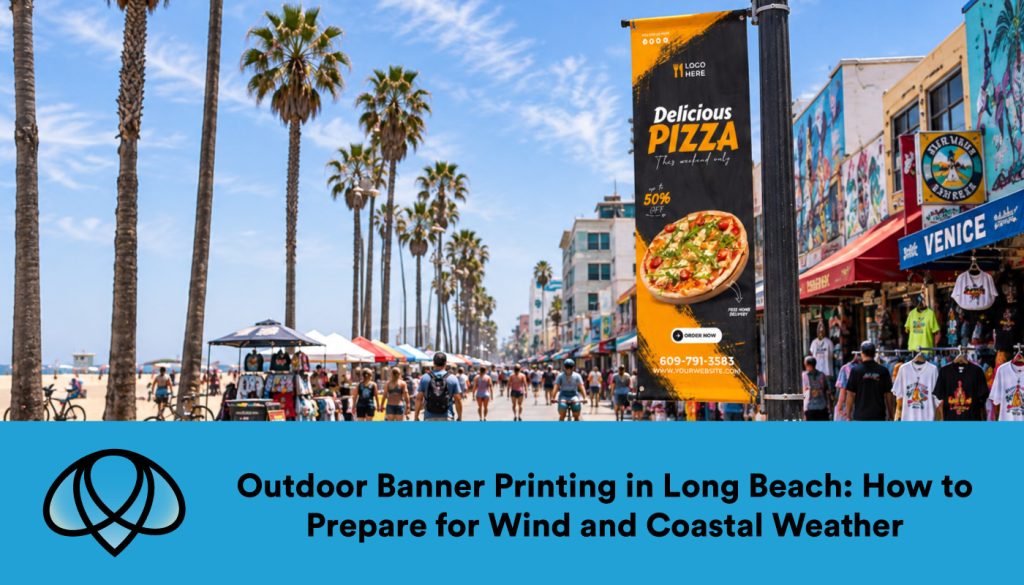
Vertical outdoor pizza banner on a light pole along a palm-lined beach boardwalk
Signs & Banners

Outdoor Banner Printing in Long Beach: How to Prepare for Wind and Coastal Weather

Outdoor banners near the coast face conditions that can be harder on printed graphics than a typical indoor or protected installation. Wind, direct sunlight, moisture, and salt-laden coastal air can all affect materials, hardware, and mounting points. Choosing outdoor banner printing in Long Beach with the installation environment in mind can help businesses avoid treating every outdoor banner as though it will face the same conditions. For exposed locations, wind-resistant banners require more than durable material. Banner size, finishing, mounting method, tension, placement, and the structure supporting the banner all contribute to how it performs. Businesses planning recurring events, property signage, construction graphics, retail promotions, outdoor campaigns, or multi-location displays should consider these factors before production so materials and finishing can be matched to the application. Why Coastal Wind and Salt Air Wear Down Outdoor Banners Faster Long Beach combines strong sun exposure with changing coastal conditions. A banner installed near the waterfront may encounter wind, moisture, airborne salt, and extended UV exposure. Movement is one of the biggest concerns. When a loosely installed banner repeatedly snaps or pulls against its attachment points, stress becomes concentrated around the edges and grommets. Coastal weather signage therefore needs to be planned as a complete installation rather than simply a printed sheet of material. The expected duration also matters. Graphics needed for a weekend event have different requirements from signage expected to remain outside for an extended campaign. Mesh vs. Solid Vinyl for Windy Long Beach Locations Material selection should begin with the installation site. Mesh banners in Long Beach allow some air to move through the material, which can make them a practical choice for exposed fences, construction areas, and other locations where wind load is a concern. The open structure can reduce some of the pressure created when wind pushes against a large banner surface. Solid vinyl provides a continuous printable surface and can produce strong graphics for many outdoor applications. It may be appropriate for building displays, event signage, promotional banners, and locations with more protection from strong wind. Neither material is automatically right for every project. Size, location, mounting surface, expected weather, viewing distance, and desired print appearance should all influence the decision. Hemming, Grommets, and Wind Slits: Finishing that Prevents Tearing Finishing can determine whether a well-printed banner performs properly once installed. Banner grommets and hemming help reinforce attachment areas and distribute stress along the edges. Grommet spacing should be appropriate for the size and intended mounting method rather than treated as an afterthought. Installation is equally important. A banner that is secured only at a few widely spaced points may place excessive stress on individual grommets. Wind slits are sometimes requested for windy applications, although mesh material may be a more suitable approach for certain exposed installations. The complete project should be evaluated based on the banner dimensions, material, mounting surface, and environment. These details become particularly important when companies are ordering multiple graphics for properties, job sites, events, or coordinated outdoor campaigns. Choosing UV-Resistant Inks and Materials for Year-Round Sun Exposure Southern California sunlight can gradually affect outdoor graphics. UV-resistant banner ink and materials intended for outdoor use can help graphics withstand sun exposure, but no outdoor print is completely immune to weathering. Orientation, hours of direct sunlight, installation duration, and surrounding conditions can all influence appearance over time. Color selection can matter as well. Strong contrast and clear visual hierarchy help banners remain readable from their intended viewing distance. For larger programs, consistent production is particularly important. Businesses ordering banners for several locations or a continuing series of events generally want logos, colors, messaging, and finishing to remain consistent from one order to the next. Mounting and Tensioning Tips for Fences, Poles, and Building Facades A banner should be supported evenly rather than allowed to pull heavily from isolated attachment points. Fence installations may provide multiple locations for securing the perimeter. Building-mounted banners can require different hardware depending on the surface and installation method. Pole-mounted applications introduce another set of structural considerations. Regardless of the location, installers should consider: Banner Size and Weight Expected Wind Exposure Attachment-Point Spacing Mounting Surface Edge Reinforcement Appropriate Tension Hardware Condition Installation Duration Wind-resistant banners still depend on proper installation. A durable banner cannot compensate for unsuitable hardware, inadequate attachment points, or an installation method that allows excessive movement. How Long an Outdoor Banner Should Last Near the Coast There is no single lifespan that applies to every outdoor banner. A temporary event banner may only need to perform for several days, while a construction, property, retail, or organizational display may be expected to remain installed considerably longer. Material, printing method, finishing, sunlight, wind, moisture, placement, maintenance, and installation quality can all influence longevity. Outdoor banner printing in Long Beach should therefore begin with a simple question: how and where will the banner be used? Giving the printer that information makes it easier to determine suitable material and finishing specifications before the project goes into production. Planning Banner Orders for Long Beach Events and Waterfront Businesses Planning ahead becomes especially valuable when an organization needs multiple banners, several sizes, coordinated graphics, or signage for an established event schedule. Vinyl banners in Long Beach can support promotions, corporate events, retail locations, venues, construction projects, community programs, sponsorships, and other outdoor applications. When several pieces are being produced, confirming artwork, dimensions, finishing, quantities, and installation requirements together can make production considerably smoother. Printing Fly’s typical turnaround time is approximately 2-3 business days. Same-day and next-day printing are not standard production options, so businesses should build production time into their event and installation schedules. Rush options may be available depending on the project, production requirements, and current schedule. That additional planning time also provides an opportunity to coordinate banners with flags, event signage, backdrops, tents, fence graphics, and other printed materials needed for the same campaign. Frequently Asked Questions Are mesh banners better for windy locations in Long Beach? Mesh can be useful in exposed areas because its construction allows some air

Restaurant patio banner with a burger graphic hung on an outdoor railing
Blog, Signs & Banners

How Los Angeles Restaurants, Hotels and Retailers Can Prepare Signage for Summer 2028

Summer 2028 will put Los Angeles businesses in front of an unusually large mix of local customers and international visitors. Restaurants, hotels, retailers, entertainment districts, shopping destinations, and hospitality groups can prepare now by identifying where signage will be needed, how visitors will move through their properties, and which graphics may require coordinated production across multiple locations. Planning signage for Summer 2028 in Los Angeles early does not mean printing everything years in advance. It means developing the visual system, identifying sizes and locations, determining materials, preparing adaptable artwork, and establishing a production plan before demand intensifies. Restaurant signage in Los Angeles will have an especially important job. It may need to attract visitors from the street, explain menus quickly, identify pickup or waiting areas, direct crowds, and communicate promotions to customers who may be seeing the business for the first time. Why Los Angeles Businesses Should Plan 2028 Signage Now Major events create opportunities, but they also create production pressure. Businesses waiting until crowds arrive may suddenly need banners, window graphics, directional signs, menus, flags, displays, or replacement graphics at the same time as many other organizations. Early planning allows businesses to identify the complete scope of the project instead of ordering individual signs reactively. A multi-location restaurant group, for example, may need coordinated storefront graphics, patio banners, menu displays, and directional signs across several properties. A hotel group may need exterior graphics, lobby displays, event signage, and wayfinding. Retailers may need campaign graphics that can be adapted to different storefront dimensions. Planning the system first makes it easier to keep the finished pieces visually connected. Restaurant Signage: Menus, Sidewalk Signs, and Patio Banners for Crowds Busy restaurants need signs that communicate quickly. Visitors walking through an unfamiliar neighborhood may decide where to eat based partly on what they can understand from the sidewalk. Clear menus, hours, entrances, waiting instructions, and promotional graphics can reduce uncertainty before customers reach the door. Useful options can involve: A-Frame Sidewalk Signs Patio Banners Window Graphics Menu Displays Directional Signs Pickup Area Signs Event Graphics Promotional Flags Restaurant signage in Los Angeles can also be designed as a coordinated family rather than a collection of unrelated pieces. Consistent typography, colors, photography, logos, and messaging can make a restaurant easier to recognize from the sidewalk through the dining entrance. For restaurant groups, those same design standards can then be adapted across multiple locations. Hotel Signage: Lobby Displays, Wayfinding, and Exterior Banners Hotels may need to communicate with guests from the moment they arrive at the property. Hotel signage in Los Angeles can support entrances, check-in areas, meeting spaces, restaurants, elevators, transportation zones, temporary events, and other guest destinations. Wayfinding deserves particular attention. A beautifully printed sign is ineffective if a visitor still does not know where to go. Hotels preparing for large groups can map the guest journey and identify decision points where signage may be useful. Temporary event graphics can then work alongside permanent property signage without competing with it. Large vinyl banners can also provide high-visibility exterior messaging for special events, welcome graphics, sponsored programs, or temporary property communications. Retail Signage: Window Graphics, Sale Banners, and Advertising Flags Summer foot traffic gives retailers an opportunity to turn storefront space into advertising space. Storefront signage can introduce the brand before someone walks through the door. Window graphics can promote products or campaigns without consuming valuable floor space. Advertising flags can add movement near entrances, while banners can make seasonal messages visible from greater distances. Retail banners in Los Angeles can be particularly useful when businesses need graphics that can be installed for a campaign and replaced when promotions change. Retailers with several locations should consider how the campaign will adapt to different windows, entrances, facades, and available mounting areas. Instead of designing every piece separately, Printing Fly can coordinate a broader graphics package so the campaign remains recognizable across multiple formats and properties. Multilingual and Visitor-Friendly Signage for International Guests Los Angeles already serves an international population, and Summer 2028 will bring additional visitors who may not be familiar with local businesses, neighborhoods, transportation patterns, or venue layouts. Good signage can communicate without relying on lengthy explanations. Simple wording, recognizable symbols, arrows, numbering systems, strong contrast, and clear hierarchy can make directional information easier to understand. When multilingual copy is appropriate, businesses should determine which information genuinely needs translation rather than attempting to place excessive text on every sign. Graphics can also be designed with enough flexibility to accommodate languages that require different amounts of space. Visitor-friendly signage is ultimately about reducing friction. People should be able to determine where they are, where they need to go, and what action to take within seconds. Durable Materials for High-Traffic, High-Sun Summer Use Los Angeles summer conditions should influence material selection. Outdoor graphics may face prolonged sun exposure, heat, dust, wind, repeated handling, and installation in areas with substantial pedestrian traffic. A temporary indoor lobby sign and an exterior banner exposed to direct sunlight should not automatically use the same materials or finishing. Projects may require consideration of: UV Exposure Wind Conditions Installation Duration Viewing Distance Mounting Surface Indoor or Outdoor Placement Frequency of Handling Replacement Schedule Large vinyl banners, flags, window graphics, rigid signs, and other display products each have different strengths. Discussing the installation environment before production helps determine which format is appropriate for each application. Creating One Visual System across Multiple Locations For larger restaurant, hotel, and retail organizations, Summer 2028 signage may extend far beyond one storefront. A brand could need graphics for numerous locations, several departments, temporary events, sponsor activations, hospitality areas, or changing promotional campaigns. Signage for Summer 2028 in Los Angeles can be planned as a coordinated program with established specifications for colors, logo placement, typography, sizing, finishing, and recurring display formats. That creates consistency while still allowing individual graphics to change. It can also make future ordering more efficient because the organization already has established formats that can be updated with new messages instead of rebuilding

Scroll to Top